Freedom Camping in New Zealand 2026: The New Rules
Yes, freedom camping is still legal in New Zealand in 2026, but to sleep in a vehicle on most council land it must be certified self-contained with a green warrant. Since 7 June 2026 the old blue warrants no longer count for any vehicle, and a certified vehicle must have a toilet fixed inside it. Camp in an uncertified vehicle where self-containment is required and the infringement fee is NZ$400.
Tents, DOC land, private land and paid campgrounds each work differently, and the table below sorts them out. Plan your route with our South Island itinerary first, then use this post to check where you can legally sleep.
What changed on 7 June 2026?
7 June 2026 was the last step of a change that began in 2023 with the Self-contained Motor Vehicles Legislation Act. MBIE's reform timeline sets out the steps:
- June 2023. Vehicle camping on council land started to need self-contained certification, unless a council site allowed otherwise. The main infringement fee rose from NZ$200 to NZ$400 that July.
- 7 December 2023. The green warrant became available. It needs a fixed toilet and lasts up to four years.
- 7 June 2024. The last day anyone could apply for a blue warrant.
- 7 December 2024. Blue warrants on rental vehicles stopped counting.
- 7 June 2026. Blue warrants on privately owned vehicles stopped counting. This was originally due in June 2025, but the government extended it by a year so owners could get inspections done.
Any guide that says a blue warrant or a portable toilet is fine is out of date. 1News reported more than 68,000 green-warrant vehicles by early June 2026.
What counts now, according to the Plumbers, Gasfitters and Drainlayers Board, which regulates certification:
- A green warrant card from an approved certification authority after an inspection. The vehicle also goes on a national register.
- A toilet permanently fixed to the vehicle and usable inside it. Portable toilets don't qualify.
- Fresh water, wastewater, ventilation, a sink and secure rubbish storage that meet the board's requirements.
- The card on display inside the front windscreen wherever self-containment is required, at the bottom left according to Queenstown Lakes District Council. It shows how many people the vehicle can sleep.
Stickers mean nothing. The board says "self-contained" stickers have no official status.
What the law did not change
- Tents. Tent camping is still allowed by default on council and DOC land unless local rules say otherwise (LGNZ guidance). Plenty of councils do say otherwise. A tent attached to a vehicle counts as part of the vehicle (MBIE fact sheet).
- Commercial campgrounds. Registered camping grounds and sites you pay to camp at sit outside the Freedom Camping Act 2011, so any vehicle or tent is fine.
- Private land. The Act doesn't apply. Camp with the owner's permission.
- DOC land. Non-certified vehicles can still camp on conservation land unless DOC has prohibited it or restricted it to self-contained vehicles (DOC freedom camping rules).
Can I camp here in my vehicle?
This is the table to screenshot. It shows the default rules, and local bylaws, DOC notices and signs can always be stricter.
| Your setup | Council land | DOC land | Commercial campgrounds | Private land |
|---|---|---|---|---|
| Tent | Only where the council's bylaw allows it | Yes, unless prohibited or restricted | Yes, you pay per night | Yes, with permission |
| Non-certified car or van | Only at sites set aside for non-self-contained vehicles | Yes, unless prohibited or self-contained only | Yes, you pay per night | Yes, with permission |
| Green-warrant self-contained vehicle | Yes, where the bylaw and signs allow it | Yes, unless prohibited | Yes, you pay per night | Yes, with permission |
DOC's 300-plus campsites are designated campgrounds, so staying at one isn't freedom camping and you usually don't need a warrant. Away from them, freedom camping is banned in scenic and recreation reserves, and so is freedom camping with a dog in a national park. DOC's list of prohibited and restricted conservation areas includes the Franz Josef Glacier road and car parks, Patience Bay on the Milford Road and the Kura Tawhiti (Castle Hill) car park.
Renting a campervan: what to ask before you pay
Blue warrants on rentals stopped counting in December 2024, so a reputable company's self-contained fleet should be on green warrants. Check anyway, because "self-contained" in a listing means nothing until you see the paperwork. Ask:
- Is this exact vehicle certified with a green warrant? Not the model. Get the number plate.
- Is the toilet fixed to the vehicle? A portable toilet in a cupboard means it can't be certified.
- When does the warrant expire? It must be valid until your last night of camping.
- How many people is it certified for? Camping with more than the card allows is a NZ$400 offence.
- Is the warrant card displayed? It should be inside the front windscreen when you collect the van.
- What happens if I get a fine? Your rental agreement can let the company charge the infringement fee to your card. You can still challenge the notice.
Cheaper sleeper vans without a fixed toilet are fine for holiday parks and DOC campsites. Just budget for a paid site most nights.
How do you check a vehicle on the Self-Contained Motor Vehicles Register?
The national Self-Contained Motor Vehicles Register is run under the Plumbers, Gasfitters and Drainlayers Board, and anyone can search it. Do it for a rental or a van you might buy.
- Open the register's vehicle search.
- Enter the vehicle's number plate, or its VIN or chassis number.
- Read the result. The board's enforcement guidance says the register's public view shows whether the vehicle holds a current certificate, whether an earlier one expired or was revoked and the expiry date.
- Match the register against the card in the windscreen.
Buying a van from another traveller is where people get caught. A blue card is worthless now. If the van isn't on the register with a current certificate, price it as uncertified.
Own the vehicle? Find a certification authority through the register and book an inspection. You pay their fee plus a NZ$120 levy including GST. Older guides cite the standard NZS 5465:2001, which the 2023 law amended to require a permanently fixed toilet.
Where can you find legal freedom camping spots in the South Island?
Start with the council for the district you'll sleep in, then check DOC.
- Council maps. Most councils publish maps of allowed, restricted and prohibited areas.
- DOC campsites. The DOC campsite search covers more than 300 campsites nationwide.
- Holiday parks. Most South Island towns of any size have one, and no warrant is needed.
- Apps. CamperMate and Rankers are camping apps many travellers use. Confirm the council or DOC rule for any spot an app suggests.
Council rules in four key districts
- Queenstown Lakes. The Freedom Camping Bylaw 2025, in force since 1 December 2025, allows certified self-contained vehicles only, in designated car parks or on rural roads under set conditions. Urban areas are off limits, and Wānaka's Allenby Place car park is closed to campers until 31 January 2027.
- Mackenzie. The Responsible Freedom Camping Bylaw 2023 prohibits camping in parts of Tekapo. Self-contained vehicles can use council sites such as The Pines at Lake Pukaki, while tents and non-certified vehicles go to holiday parks in Tekapo, Twizel, Fairlie and Glentanner.
- Westland. The council allows freedom camping in certified self-contained vehicles only and sends tents to commercial campsites. It publishes where-to-camp maps for Hokitika, Franz Josef, Fox Glacier and Haast.
- Christchurch and Banks Peninsula. Under the Freedom Camping Bylaw 2021, amended in 2023, tents and non-certified vehicles can't freedom camp and the central city is prohibited. Akaroa allows only its 18 marked spaces, for two nights in any 30 days (council brochure).
What are the rules on the night?
The warrant gets you in. These keep you out of trouble once you're parked.
- Read the signs. "No camping" applies to certified vehicles too. Some restricted DOC areas have no signs, so check DOC's list.
- Respect time limits. Two nights in any 30 days is common in Queenstown Lakes and Christchurch. Some Queenstown Lakes car parks also want you in after 6pm and out by 8am.
- Park properly. Use marked spaces or formed surfaces. On Queenstown Lakes rural roads, stay 5 metres from the road edge and 10 metres from any river, lake or creek.
- Take your rubbish. Dumping waste carries an NZ$800 infringement fee.
- Empty tanks at a dump station. Never down a stormwater drain or in the bush.
- No open fires. DOC asks for no fires and Queenstown Lakes bans them outside the vehicle.
Pulling over to rest and beat driver fatigue is not freedom camping, according to LGNZ's guidance. Setting up for the night is. Our guide to driving in the South Island covers fatigue and long days at the wheel.
What are the fines for freedom camping in NZ?
These national infringement fees come from MBIE's offences table and apply on council, DOC and LINZ land. If a case goes to court, the maximum fine is three times the fee.
| Offence | Infringement fee |
|---|---|
| Camping or preparing to camp in a non-self-contained vehicle where self-containment is required | NZ$400 |
| Camping in breach of a council bylaw or DOC notice | NZ$400 |
| More people than the vehicle is certified for | NZ$400 |
| Not displaying your warrant card | NZ$200 |
| Refusing to leave when an officer asks | NZ$600 |
| Showing an altered or fraudulent warrant card or certificate | NZ$600 |
| Damaging the area or dumping waste | NZ$800 |
Some council reserves fall under the Reserves Act instead, and Queenstown Lakes lists an NZ$800 fine for camping overnight on its reserves.
Cheap alternatives if your vehicle isn't certified
An uncertified van or a car with a mattress in the back still works here. You just pay for most nights.
- DOC campsites. The cheapest legal option on most trips, and often in better spots than freedom camping car parks. DOC lists basic sites as free, standard sites at NZ$10 to NZ$20 and serviced sites at NZ$25 unpowered or NZ$20 to NZ$28 powered, per adult per night.
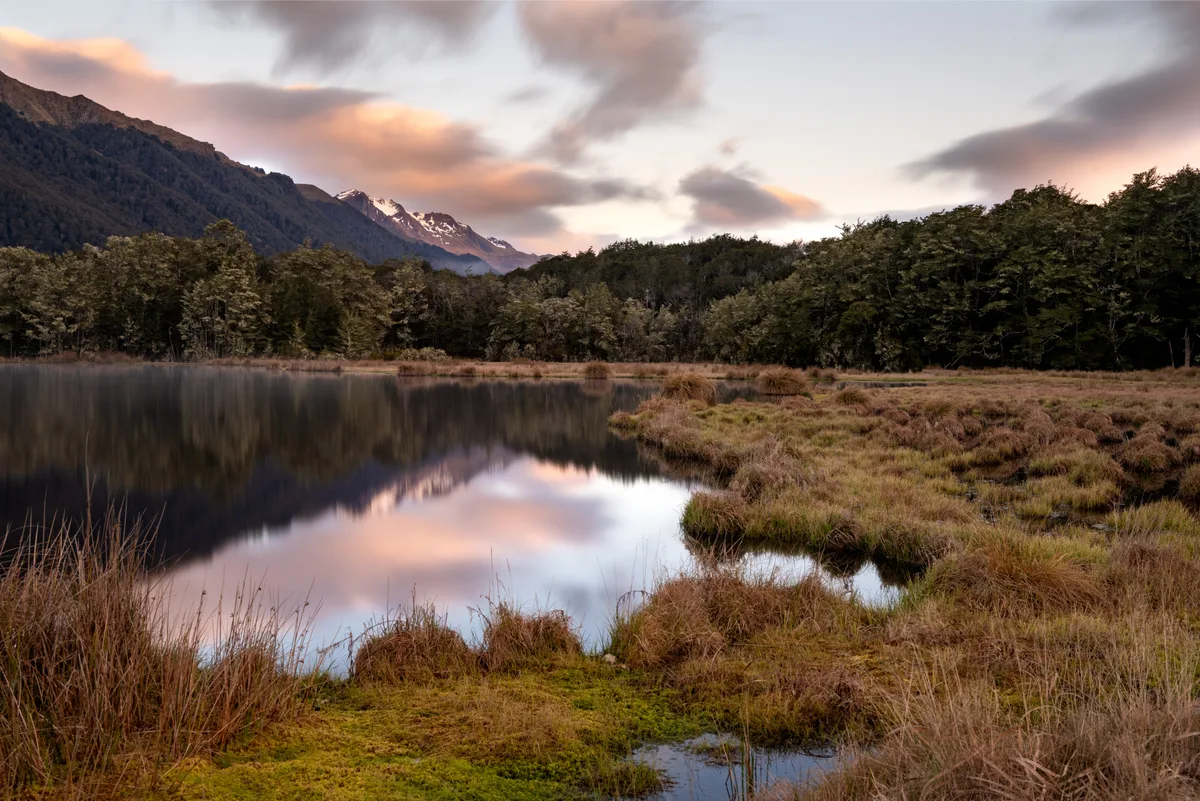
Mavora Lakes, a DOC campsite in Southland. Photo: Chris McLennan, Great South. - Council campgrounds. Christchurch City Council runs four that take tents and campervans: Spencer Beach, Duvauchelle, Okains Bay and Pigeon Bay.
- Holiday parks. Unpowered sites are the cheap end, and you usually get hot showers and a kitchen.
- Hostels. On a wet West Coast night a bunk beats a soggy tent.
For a full budget, see how much a South Island trip costs . When the plan falls over late in the day, open Kiwi Guide to find a cheap place to stay or a feed in the next town along.
Frequently asked questions
Is freedom camping legal in NZ in 2026?
Yes. You can still freedom camp on a lot of council and DOC land, but on council land a vehicle usually needs green-warrant self-contained certification. Many councils also have bylaws with their own prohibited and restricted areas. Blue warrants stopped counting on 7 June 2026.
Can I freedom camp in a tent in New Zealand?
Sometimes. Tents are allowed on DOC land unless the area is prohibited or restricted, and on council land only where the bylaw allows it. Christchurch and Westland send tents to campgrounds, and Queenstown Lakes allows freedom camping in self-contained vehicles only. Most tent campers use DOC campsites or holiday parks.
What is a green warrant?
It's the card a vehicle gets after passing a self-containment inspection by a certifier approved by the Plumbers, Gasfitters and Drainlayers Board. The vehicle needs a fixed toilet plus water, wastewater and rubbish systems, and the warrant lasts up to four years. Since 7 June 2026 it is the only warrant that counts.
Can you freedom camp in a rental campervan?
Yes, if that vehicle has a current green warrant and a fixed toilet. Blue warrants on rentals stopped counting in December 2024. Ask for the number plate, check it on the Self-Contained Motor Vehicles Register and make sure the expiry date covers your trip.
What is the fine for freedom camping illegally in NZ?
The usual infringement fee is NZ$400 for camping in a non-self-contained vehicle where certification is required, or for breaching a bylaw. Not displaying your warrant card is NZ$200, refusing to leave is NZ$600 and damaging the area or dumping waste is NZ$800. Rental companies can pass the fee on to your credit card.
Find a cheap bed in the next town
Kiwi Guide helps you find places to stay, eat and fuel up near where you are, with a lean towards cheap and cheerful.
Explore Kiwi Guide