Lupin Season at Tekapo: When and Where to See Them
Lupins around Lake Tekapo usually flower from mid-November to early January, and the best weeks are late November to mid-December. Expect patches rather than the solid purple shorelines in older photos, because wild Russell lupin is a declared pest in Canterbury and is now actively controlled. The main places to look are the Tekapo lakefront, Godley Peaks Road, Lake Pukaki and SH8 south through Ōmarama to Lindis Pass.
Most people catch them on the way from Christchurch to Queenstown, so build Tekapo into our South Island itinerary for 7, 10 and 14 days as an overnight stop.
When do the lupins bloom at Tekapo?
The window shifts a week or two each spring. Discover New Zealand's 2026 guide puts peak flowering at late November to mid-December. One blogger who visited Tekapo in two seasons found far more flowers on 5 December than on 18 January.
| When | What to expect |
|---|---|
| Early November | Mostly leaves |
| Mid-November | First colour in sunny spots |
| Late November to mid-December | Peak at Tekapo and around the basin |
| Late December to New Year | Still good in places, older spikes going to seed |
| Mid-January onwards | Mostly seed pods |
If you can only pick one week, make it the first week of December. For how lupin season fits with weather and crowds, read the best time to visit the South Island .
2026 bloom updates
We update this log weekly from mid-November to early January, newest first.
31 October 2026
The season hasn't started. We found no reports of 2026 flowering from Tekapo or the wider Mackenzie, which is normal for late October. First colour usually shows around mid-November. If you're booking now, late November to mid-December is still the safest bet. Next update: mid-November.
Why are there fewer lupins than in the old photos?
Russell lupins aren't native, and Canterbury now treats them as a weed. They reached the Mackenzie Basin in the 1940s through deliberate sowing and garden escapes, according to Te Ara. The best-known sower is Connie Scott of Godley Peaks Station. In 1949 she bought a load of seed, hid the bill from her husband and scattered it along the roadside with her schoolboy son, New Zealand Geographic reports.
It worked too well. Te Ara explains that lupins bind braided river gravels and push the water into deeper, faster channels, while the wrybill (ngutu pare) needs shallow braids to feed. It breeds on braided riverbeds and is the only bird whose bill curves to the right. Dense lupin also hides predators on nesting islands, says Environment Canterbury.
Where things stand in 2026:
- Wild Russell lupin is a declared pest in the sustained control programme of the Canterbury Regional Pest Management Plan 2018 to 2038. Rural occupiers must clear it within 200 metres of a braided river, 50 metres of other rivers and 10 metres of a neighbouring boundary. Otago Regional Council also manages it as a pest.
- NZTA has run annual lupin control along the SH8 road margins, according to a 2022 Mackenzie District Council notice.
- Te Manahuna Aoraki, a DOC, mana whenua and landowner partnership in the upper Mackenzie Basin, aimed to remove every adult wild Russell lupin from its project area by 2024. It hasn't yet published whether it got there.
- Volunteers are clearing the Lindis Pass Scenic Reserve, and lupins across from the Church of the Good Shepherd were removed and natives planted from 2022.
You'll still find decent patches in a good year. Just not on every bend.
Where can you see lupins around Tekapo?
Every spot below is a public reserve or road verge unless we say otherwise. Patches shift each year, so check the bloom log first.
Tekapo lakefront and the Church of the Good Shepherd
The reserve between SH8 and the lake is run by the district council, and a lakefront path follows it to the footbridge over to the church. It's the easiest place to look and also the busiest.
The church grounds are private, open 9am to 8pm in summer and closed at night. The visitor guidelines ask you to stay on the paths, keep off the tussock and not climb the fence. A NZ$5 donation is requested. With the patch opposite now in natives, it's no longer the lupin shot it once was.
A large field on the northern edge of the village, popular online, appears to be private farmland. Look from the road.
Godley Peaks Road
This road leaves SH8 just west of the village and runs up the western shore of the lake. In good years its verges carry long lines of lupins with the water behind. Much of the land along it is private station country, including Godley Peaks Station. View from the road only. Pull fully off where it's safe and never block a farm gate.
Lake Pukaki and SH8
South on SH8, Lake Pukaki has scattered patches with Aoraki/Mount Cook behind and fewer people than Tekapo. Don't stop on the highway shoulder. NZTA built a safe stopping area at Hayman Road on the eastern shore after drivers kept parking on no-stopping lines on a fast curve. Treat roadside colour here as a bonus.

Ōmarama Clay Cliffs
The Paritea Clay Cliffs sit near the Ahuriri River west of Ōmarama. Turn off SH8 onto Henburn Road and walk about 15 minutes from the car park. The cliffs are on private land. Bring NZ$5 cash per car for the honesty box at the gate (Tourism Waitaki) and follow the landowner's instructions. In early December 2020 one visitor found more lupins on the riverbanks below the cliffs than in Tekapo.
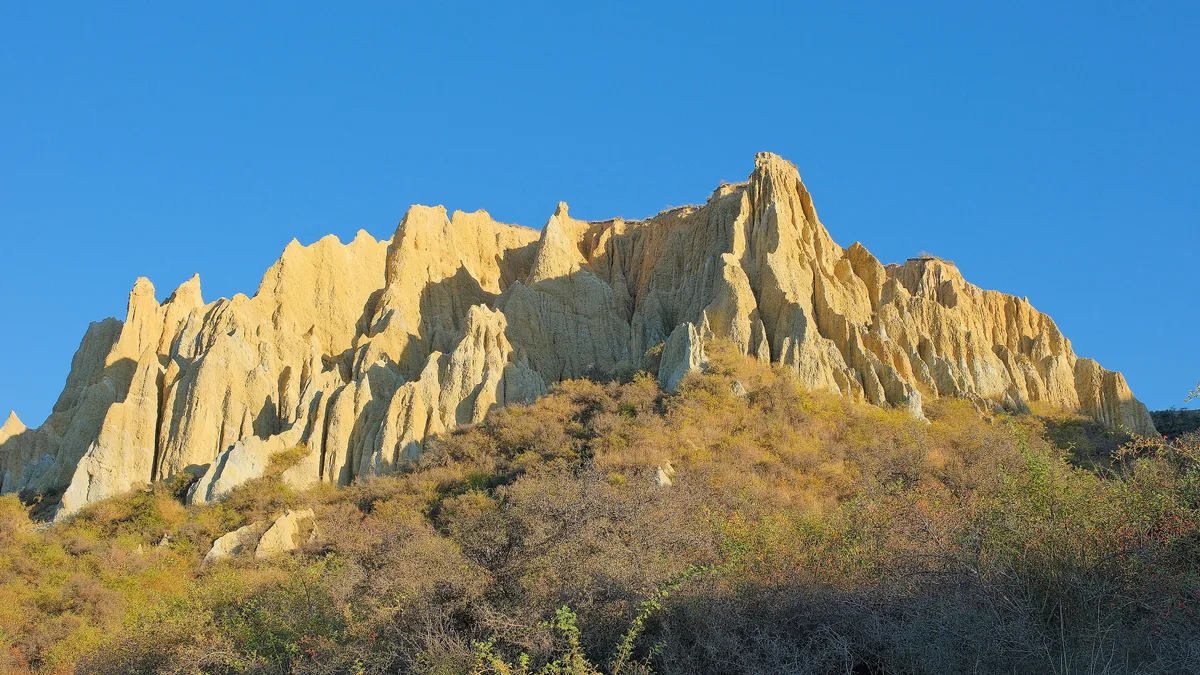
Ahuriri River
SH8 crosses the Ahuriri just north of Ōmarama. An Environment Canterbury adviser once described lower Ahuriri lupins so dense her team had to walk in the river, but one guide writer missed them on two visits. Look from the road or bank. Keep off the open gravel, which is bird nesting habitat from 1 September to 1 February.
Lindis Pass
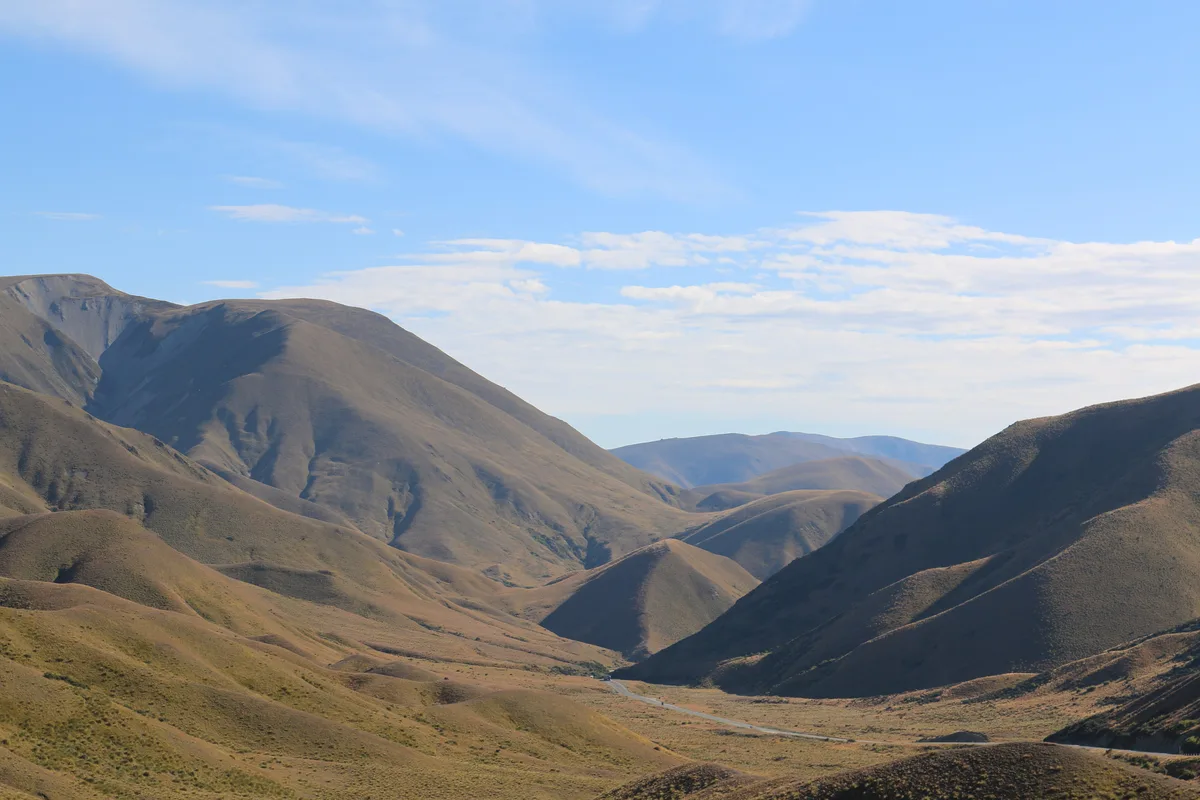
SH8 climbs through tussock towards Tarras and Cromwell, with lupins dotted along the verges. Only pull over where you can get fully off the road. A local group is stopping lupins flowering in the scenic reserve, so expect fewer each year. Our Christchurch to Queenstown road trip guide covers the other stops on this road.
How do you get good lupin photos?
- Go at sunrise. The sun is up just before 6am in late November and early December, and you'll have the public lakefront mostly to yourself. The church grounds don't open until 9am.
- Skip the middle of the day. That's usually when the church is busiest and high sun flattens the colour.
- Stay for the evening. Sunset is after 9pm in December, with soft light once the day-trippers have gone.
- Get low. Shoot through the spikes with the lake behind, or use a longer lens to stack rows together.
- Leave the drone in the car. Drones are banned on the church grounds.
How do you view the lupins responsibly?
- Stay on paths and road verges. At the church, keep off the tussock.
- Don't pick them. Wild Russell lupin is a declared pest in the Canterbury pest plan, so under the Biosecurity Act 1993 it's an offence to knowingly spread, sell or propagate it, seed included. Flowers on farms and church grounds aren't yours either, and a late-season stem carries seed.
- Don't carry seed. Environment Canterbury lists people among the ways seed spreads. Brush off boots, clothes and gear. Check campervan mats and never take seed home or scatter it.
- Stay off private land. Don't climb fences or gates, don't walk into paddocks for a shot and don't park across a farm gate.
- Give river birds space. Near braided rivers, keep to formed tracks and back away from birds that swoop or fake a broken wing. They're protected under the Wildlife Act.
Make a night of it: stars and Aoraki/Mount Cook
Tekapo sits inside the Aoraki Mackenzie International Dark Sky Reserve, 4,367 km² of protected sky across the Mackenzie Basin and Aoraki/Mount Cook National Park. It was designated in 2012 by the body now called DarkSky International.

Lupin season means late nights. Full dark doesn't arrive until about 11pm in late November, and a bright moon washes out the Milky Way. The full moon is on 25 November 2026, so aim for the nights either side of the new moon on 9 December, right in peak bloom.
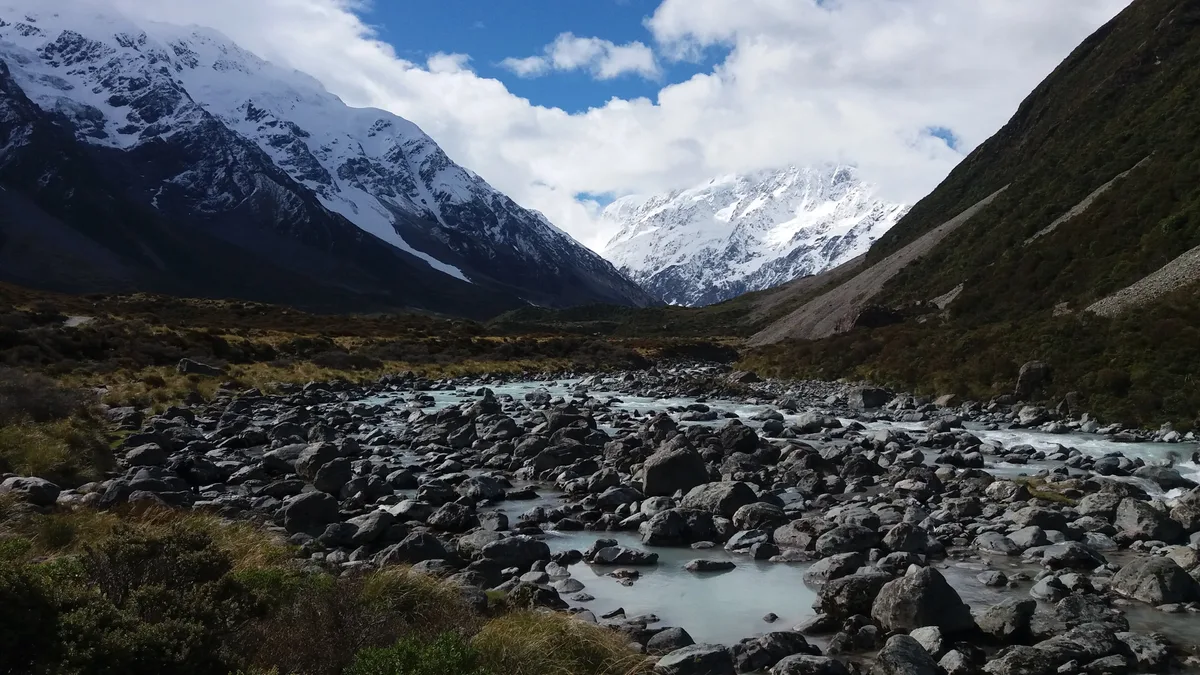
Aoraki/Mount Cook Village is 104 km from Tekapo, which DOC allows about 1.5 hours to drive. The Hooker Valley Track is an easy 3-hour return walk with three swing bridges, including a new one that opened in July 2026. The White Horse Hill car park can fill from 10am to 4pm between November and March, so go early or late.
December beds and dinner tables go fast in a village this small. If Tekapo is full, Kiwi Guide can help you find somewhere to eat or stay nearby, with a lean towards cheap and cheerful.
Frequently asked questions
When do the lupins bloom in 2026?
Expect the first flowers around mid-November 2026 and the best displays at Tekapo from late November to mid-December. By mid-January most spikes have gone to seed. The dated bloom log on this page is updated weekly through the season.
Are lupins native to New Zealand?
No. Russell lupins come from a species native to the Americas and reached the Mackenzie Basin in the 1940s through deliberate sowing and garden escapes. They're now a declared pest in Canterbury because they choke the braided rivers that native birds such as the wrybill rely on.
Can I pick the lupins at Tekapo?
Please don't. Wild Russell lupin is a declared pest in Canterbury, and knowingly spreading it, seed included, is an offence under the Biosecurity Act. The church grounds and nearby farms are private too. Picked flowers carry seed, which is exactly what the region is trying to stop spreading.
Are there still lupins at Tekapo?
Yes, but fewer than in older photos. NZTA controls them along SH8 and conservation groups clear rivers and the upper basin. The patch opposite the Church of the Good Shepherd is now native planting. In a good year you'll still find decent patches along the lakefront and Godley Peaks Road.
Find a feed and a bed near the lupins
Kiwi Guide helps you find places to eat, places to stay and fuel near where you are, from Tekapo to Lindis Pass and right across the South Island.
Explore Kiwi Guide